The story behind The Quitter Method
Sometimes, quitting is the smartest thing you'll ever do.
Growing up, we're taught that quitting is a bad thing.

Don't be a quitter. Winners never quit. Finish what you started.
Somewhere along the way, we start believing that quitting anything means we've failed. So we keep going. We keep saying yes. We keep taking on more, even when the things we're holding on to are costing us the things that matter most.
I used to believe that, too.
I learned how to work hard. I had to learn when to stop.
My dad introduced me to entrepreneurship when I was just five years old. My first business was a newspaper route, and it taught me lessons I've carried throughout my life: work hard, take responsibility, and build something for yourself.
Those lessons helped shape who I became.
But somewhere along the way, working hard turned into working all the time.
I was putting in more than 80 hours a week, focused on building businesses, providing for my family, and making sure everyone had what they needed.
I thought I was doing everything right.
Then my marriage ended, and my world fell apart.
I had spent so much time focused on work and providing for my kids that I'd lost track of myself and what mattered most.
And then something happened that changed everything.
That moment hit harder than any business failure ever could.
I realized that while I was busy trying to provide a life for my family, I was missing out on actually being part of it.
Something had to change.
So I became a Quitter.
I started making some drastic changes.
I stopped doing things that were consuming my time without making my life better. I walked away from responsibilities I didn't need to carry. I started questioning what deserved my attention and what was simply taking it.
Not everyone understood.
My ex-wife told people I'd quit everything.
But what she didn't understand was that I wasn't quitting on my life. I was quitting the things that were running it.
And I decided to own that.
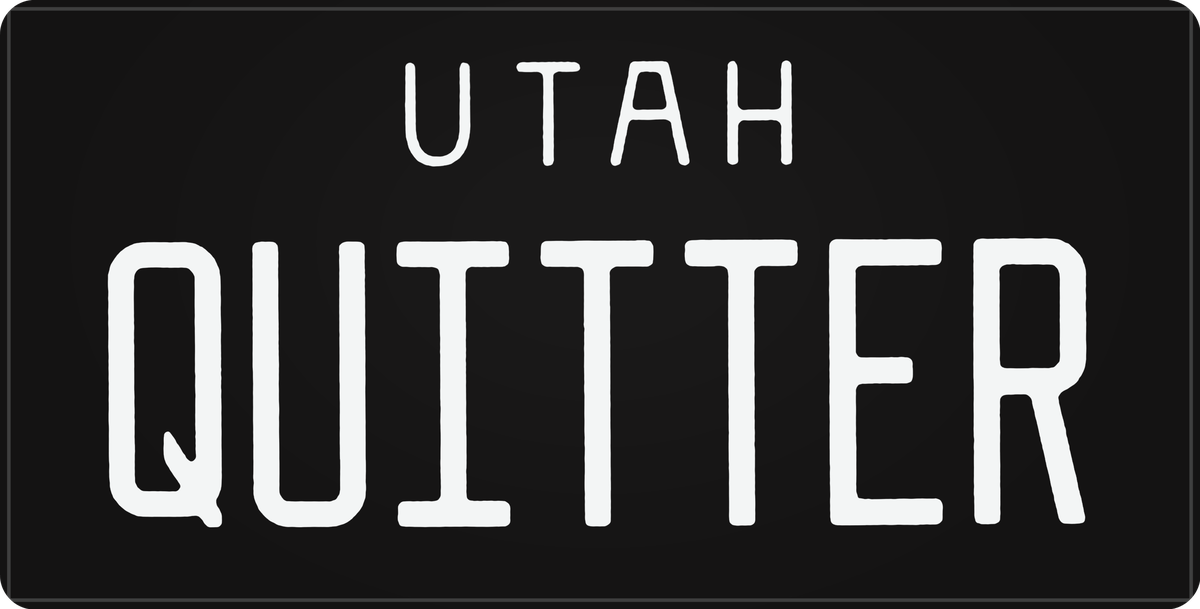
I bought an old Ford Festiva and put personalized plates on it that said QUITTER.
It became my daily reminder of where I'd been, what I'd learned, and the life I was choosing to build.
As I've upgraded my cars over the years, those plates have come with me.
Because being a Quitter isn't something I'm ashamed of. It's something I'm proud of.
That's how The Quitter Method began.
I learned that success isn't about how much you can carry. It's about knowing what you should carry in the first place.
And I realized how many business owners were living exactly the way I had.
Working nights and weekends. Answering every question. Handling every problem. Building businesses that couldn't function without them.
They'd created something they loved, but somewhere along the way, it started controlling their lives.
That's what The Quitter Method is designed to change.
Quit it. Hand it off. Or keep it.
Every responsibility in your business deserves a decision.
Quit it. Eliminate the unnecessary work, broken routines, duplicate tasks, and things that no longer move your business forward.
Hand it off. Build the people, processes, and systems that allow someone else to take ownership.
Keep it. Focus your time on the decisions, relationships, and responsibilities where you create the most value.
Simple in principle. Not always easy in practice.
That's where we come in.
We're not a friend you pay for.
A friend tells you what you want to hear. A coach tells you what you need to hear.
Some weeks you won't like us much. We'll question your pricing, push you to hand off work you'd rather hold on to, and hold you to what you said you'd do. That's the point.
Our job isn't to make you comfortable. It's to make your business, and your life, better.
Build a business that doesn’t need you for everything.
You can care about the details without handling every one of them. You can support your team without answering every question. And you can finish work without staying available all night.
Quit what’s unnecessary. Hand off what others can do. Keep what only you should.
Follow along
Follow along for straight talk about running a service business without letting it run you.